January 24, 2025

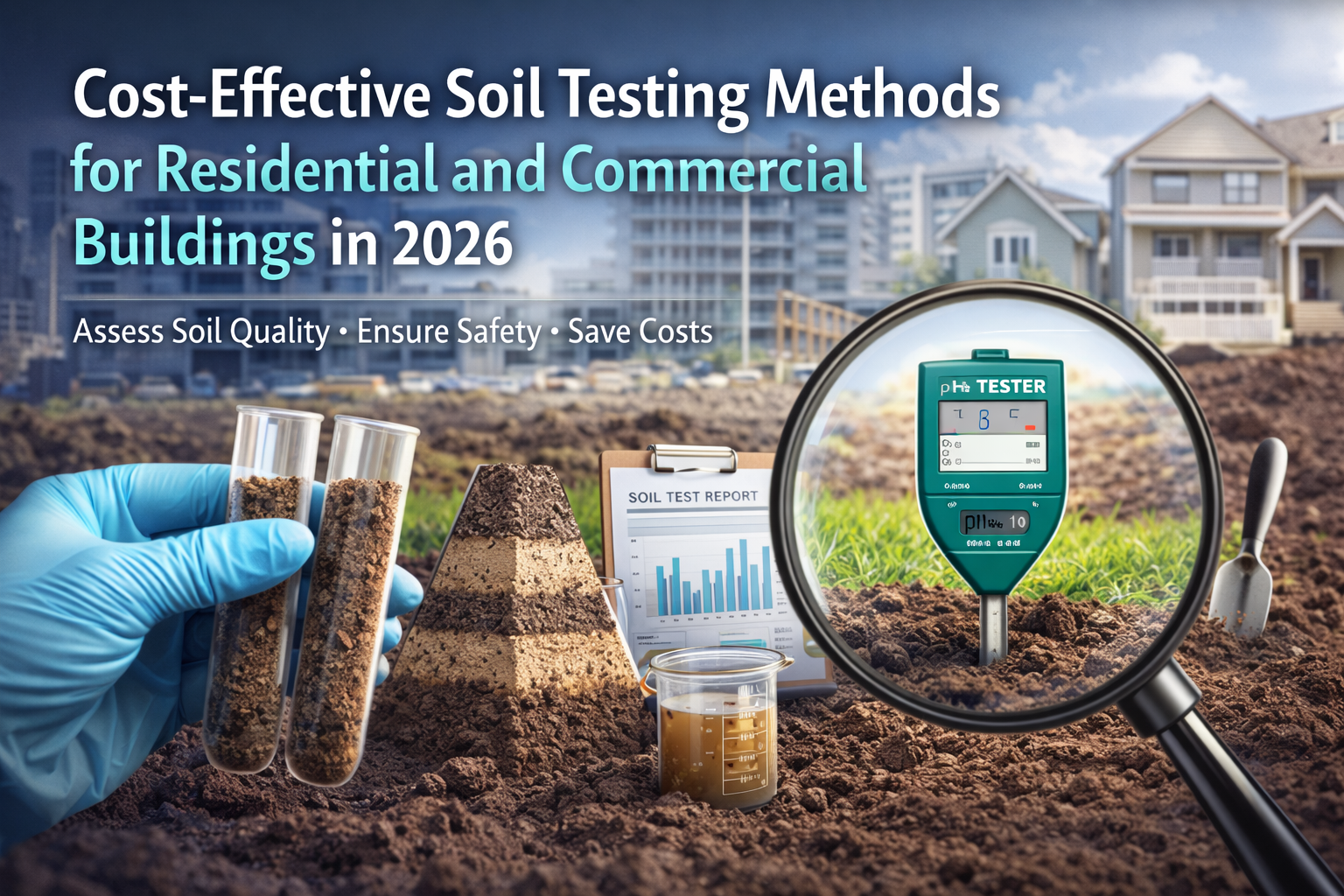
Cost-Effective Soil Testing Methods for Residential and Commercial Buildings in 2026
When planning any construction project, whether it's your dream home or a multi-story commercial complex, one critical step often gets overlooked: soil testing for construction. This foundational process can be the difference between a stable, long-lasting structure and a costly engineering disaster.
In this comprehensive guide, we'll explore everything you need to know about soil testing methods, their costs in India for 2026, and how to find affordable yet reliable geotechnical investigation services that won't compromise on quality.
What is Soil Testing for Construction and Why It Matters
Soil testing for construction is a systematic process of analyzing the physical and chemical properties of soil at a proposed building site. Think of it as a health checkup for the ground beneath your future structure—it reveals crucial information about load-bearing capacity, settlement characteristics, and potential construction challenges.
Why Soil Testing is Non-Negotiable
The importance of a proper soil test for building construction cannot be overstated. Here's why every construction project, regardless of size, needs thorough soil analysis:
Prevents Structural Failures: Weak or unsuitable soil can lead to foundation cracks, uneven settlement, and in extreme cases, complete structural collapse. Soil testing identifies these risks before construction begins.
Saves Money Long-Term: While there's an upfront cost of soil testing in India, it's minimal compared to the expenses of repairing foundation damage later. A thorough geotechnical investigation can save lakhs or even crores in remedial work.
Ensures Code Compliance: Modern building regulations in India increasingly mandate soil testing before construction. Meeting these requirements prevents legal complications and ensures your project stays on schedule.
Optimizes Foundation Design: Different soil conditions require different foundation types. Testing helps engineers design the most cost-effective foundation system for your specific site conditions.
Identifies Hidden Hazards: Soil testing can reveal underground water tables, expansive clays, presence of organic matter, or other conditions that might not be visible during a site visit but could significantly impact construction.
Different Soil Testing Methods Used in Building Construction
The field of geotechnical investigation services has evolved significantly, offering various testing methods suited to different project requirements and budgets. Understanding these options helps you make informed decisions about which tests your project truly needs.
Field Testing Methods
Standard Penetration Test (SPT): The most widely used soil testing method in India, SPT measures soil resistance and provides samples for laboratory analysis. A weighted hammer drops onto a drill rod, and engineers count how many blows are needed to penetrate the soil. This data reveals soil density and strength characteristics.
Plate Load Test: This method directly measures the bearing capacity of soil by applying loads through a steel plate and measuring settlement. It's particularly valuable for important structures where precise bearing capacity data is essential.
Dynamic Cone Penetration Test (DCPT): A cost-effective alternative to SPT, DCPT is faster and requires less equipment. It's excellent for preliminary investigations and smaller residential projects where budget constraints exist.
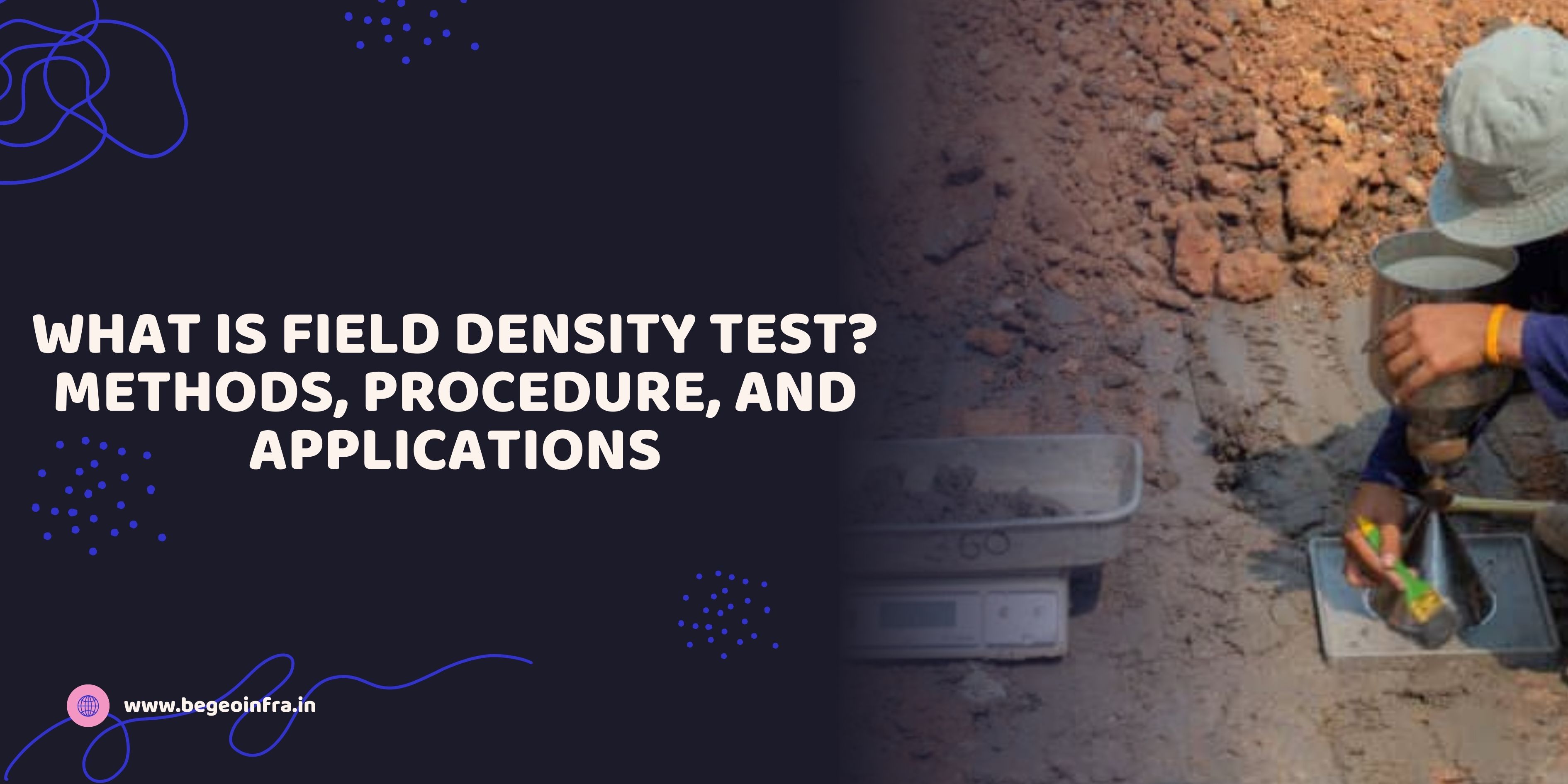
Field Density Test: This determines the in-situ density and moisture content of soil, crucial for ensuring proper compaction during construction. Common methods include the sand replacement method and core cutter method.
Laboratory Testing Methods
Once soil samples are collected from the field, laboratory testing provides detailed analysis:
Grain Size Analysis: Determines the particle size distribution, classifying soil as gravel, sand, silt, or clay. This affects drainage, compaction, and load-bearing characteristics.
Atterberg Limits Test: Measures the plasticity and consistency of fine-grained soils. The liquid limit, plastic limit, and shrinkage limit help predict soil behavior under different moisture conditions.
Compaction Test: Also known as the Proctor test, this determines the optimum moisture content for achieving maximum soil density during compaction—critical for earthwork and foundation preparation.
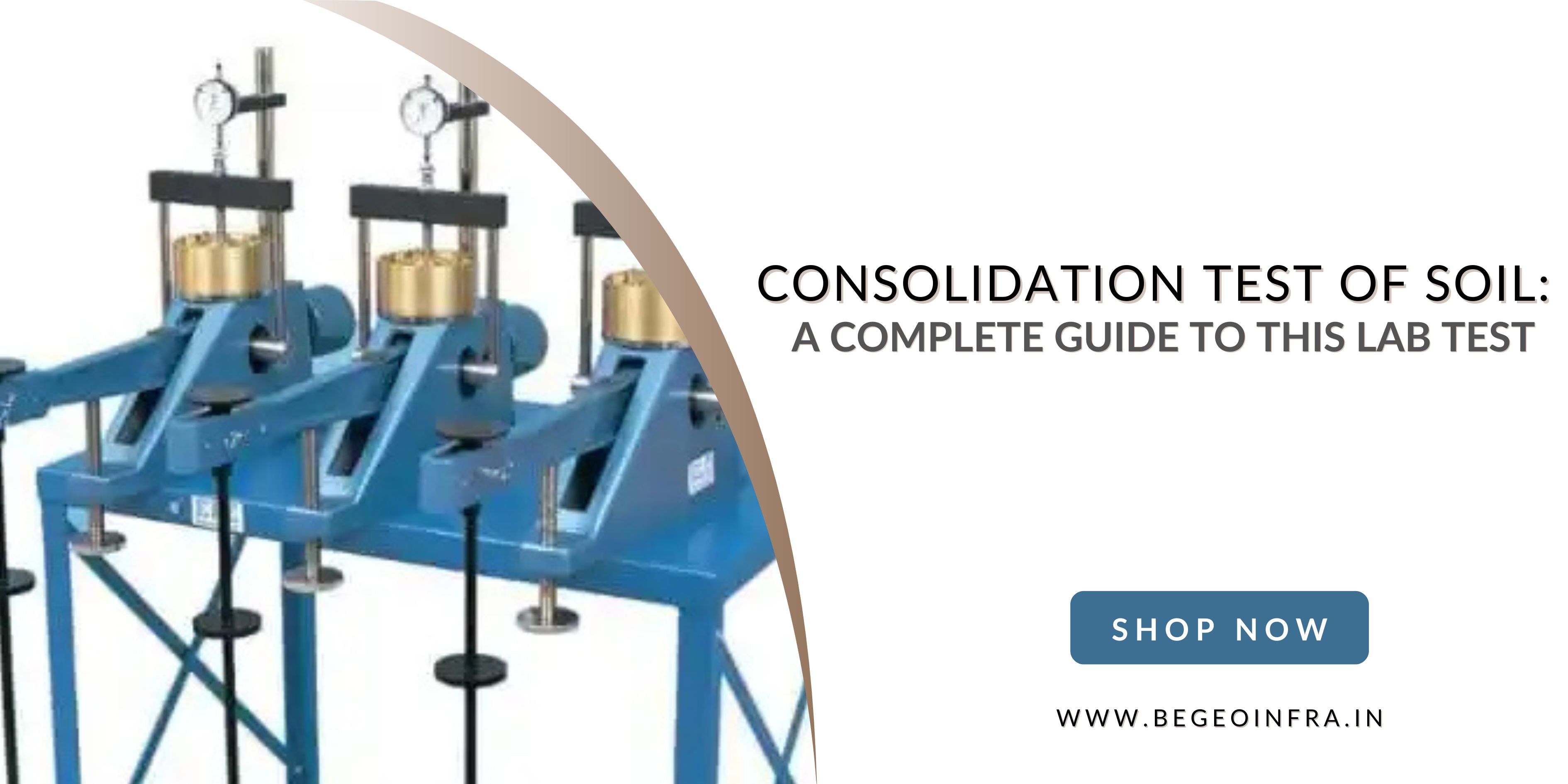
Consolidation Test: Measures how much soil will compress under sustained loading and how quickly settlement will occur. Essential for predicting long-term building performance.
Shear Strength Test: Determines the soil's resistance to shearing forces, directly affecting foundation stability and slope stability calculations.
Types of Soil Tests for Residential Buildings and Commercial Projects
The scope and complexity of soil testing varies significantly between residential and commercial projects. Understanding these differences helps you budget appropriately and ensure adequate testing for your specific needs.
Soil Testing for Residential Buildings
For individual homes and small residential complexes, a basic yet comprehensive testing package typically includes:
Essential Tests for Home Construction:
- Standard Penetration Test (SPT) at 2-4 locations depending on plot size
- Bearing capacity test of soil to determine safe foundation loads
- Basic laboratory tests including moisture content, density, and grain size analysis
- Water table assessment to identify potential moisture-related issues
For a typical residential plot (up to 500 square meters), conducting SPT at three strategic locations with basic laboratory analysis usually provides sufficient data. The soil testing before construction cost for such packages ranges from ₹15,000 to ₹35,000 in most Indian cities as of 2026.
When to Opt for Extended Testing:
- Multi-story residential buildings (3+ floors)
- Construction in areas with known problematic soils
- Sites near water bodies or in coastal regions
- Locations with previous construction failures nearby
- Plots with significant elevation changes
Soil Testing for Commercial Projects
Commercial buildings, industrial facilities, and large residential complexes require more comprehensive geotechnical investigation services due to higher loads and greater consequences of failure.
Comprehensive Commercial Testing Includes:
- Multiple borehole locations (typically one per 300-500 square meters)
- Deeper soil investigations reaching 15-30 meters or more
- Advanced laboratory testing including consolidation tests and shear strength analysis
- Groundwater analysis and chemical testing of soil and water
- Seismic considerations and liquefaction potential assessment in applicable zones
The cost of soil testing in India for commercial projects typically ranges from ₹50,000 to ₹3,00,000 or more, depending on project size, complexity, and local conditions. This investment, while substantial, represents less than 0.5% of total project cost and provides invaluable data for safe design.
Understanding Geotechnical Soil Testing Procedures
The geotechnical investigation process follows a systematic approach that ensures comprehensive site characterization. Understanding this workflow helps project owners know what to expect and how to plan accordingly.
Step 1: Preliminary Site Assessment
Before any drilling begins, geotechnical engineers conduct a desktop study reviewing:
- Topographic maps and aerial imagery
- Geological maps of the region
- Historical data from nearby construction sites
- Local soil conditions and known challenges
- Seismic zone classification
This preliminary work helps determine the number of test locations needed and which specific tests will provide the most valuable information for your project.
Step 2: Field Investigation Program
The field investigation phase involves mobilizing equipment to the site and conducting in-situ tests:
Borehole Drilling: Specialized drilling rigs create boreholes at predetermined locations. The depth typically ranges from 5-10 meters for residential buildings to 20-40 meters for large commercial structures, extending at least 1.5 times the foundation width below the proposed foundation level.
Sample Collection: Disturbed samples are collected every 1.5 meters depth change for laboratory testing. Undisturbed samples are also obtained at critical depths for advanced testing.
In-Situ Testing: Standard Penetration Tests are conducted at regular intervals during drilling, providing real-time data about soil resistance and consistency.
Groundwater Monitoring: Water table levels are recorded during drilling and monitored for 24-48 hours to understand fluctuations.
Step 3: Laboratory Analysis
Collected samples undergo various laboratory tests based on project requirements:
- Physical classification tests on all samples
- Strength tests on representative samples
- Consolidation tests for fine-grained soils
- Chemical analysis if ground conditions suggest potential corrosion issues
Step 4: Data Analysis and Reporting
Geotechnical engineers analyze all field and laboratory data to develop a comprehensive soil investigation report for building that includes:
- Detailed soil profile showing different layers and their properties
- Bearing capacity recommendations for different foundation types
- Settlement predictions under anticipated loads
- Groundwater conditions and drainage recommendations
- Specific construction precautions or special considerations
- Foundation design recommendations with appropriate safety factors
The Critical Importance of Bearing Capacity Test of Soil
Among all soil testing methods, the bearing capacity test of soil stands out as perhaps the most crucial for building safety. This test determines the maximum pressure that soil can support without shear failure or excessive settlement—essentially, it tells you how much weight your foundation can safely carry.
Why Bearing Capacity Matters
Imagine constructing a beautiful three-story building only to discover months later that the foundation is settling unevenly because the soil can't support the load. This scenario, while preventable, occurs more often than it should when bearing capacity testing is skipped or improperly conducted.
The bearing capacity test directly influences:
Foundation Size and Type: Higher bearing capacity allows smaller, more economical foundations. Lower capacity may require deep foundations like piles, increasing costs but ensuring safety.
Structural Safety: Engineers apply appropriate safety factors based on bearing capacity data, ensuring the structure remains stable under maximum anticipated loads.
Settlement Predictions: The test helps predict both total settlement and differential settlement, preventing structural damage from uneven foundation movement.
Construction Planning: Knowing soil bearing capacity early allows contractors to plan for any necessary ground improvement techniques before foundation work begins.
Safe Bearing Capacity Values
Typical safe bearing capacity values for different soil types in India (as per IS codes):
- Soft clay: 50-100 kN/m²
- Medium clay: 100-200 kN/m²
- Stiff clay: 200-400 kN/m²
- Loose sand: 100-200 kN/m²
- Dense sand: 300-450 kN/m²
- Hard rock: 3000-4000 kN/m²
These are general values—actual site-specific testing is essential as soil conditions vary significantly even within small areas.
What is an SPT Test and SPT Test Cost in India
The Standard Penetration Test (SPT) has remained the gold standard for subsurface investigation since its development in the 1920s, and for good reason—it's reliable, relatively quick, and provides both quantitative data and soil samples.
How SPT Works
During SPT testing, a thick-walled sampler is driven into the ground using a 63.5 kg hammer falling from a height of 750 mm. The test measures how many blows (N-value) are required to penetrate the soil by 300 mm after an initial 150 mm of seating drive.
The N-Value Reveals:
- N < 10: Very loose or very soft soil
- N = 10-30: Medium dense or firm soil
- N = 30-50: Dense or stiff soil
- N > 50: Very dense or very stiff soil
These N-values directly correlate to bearing capacity, settlement characteristics, and overall soil competence. Engineers use established correlations to derive engineering properties from N-values when direct testing isn't feasible.
SPT Test Cost in India (2026 Estimates)
The SPT test cost in India varies based on location, depth of investigation, and number of test points, but here are realistic 2026 estimates:
Metro Cities (Delhi, Mumbai, Bangalore, Pune):
- Per borehole (up to 10m depth): ₹8,000 - ₹15,000
- Additional depth (per meter): ₹800 - ₹1,200
- Complete package with laboratory tests: ₹12,000 - ₹20,000 per borehole
Tier-2 Cities (Jaipur, Lucknow, Indore, Coimbatore):
- Per borehole (up to 10m depth): ₹6,000 - ₹12,000
- Additional depth (per meter): ₹600 - ₹1,000
- Complete package with laboratory tests: ₹9,000 - ₹16,000 per borehole
Tier-3 Cities and Rural Areas:
- Per borehole (up to 10m depth): ₹5,000 - ₹10,000
- Additional depth (per meter): ₹500 - ₹800
- Complete package with laboratory tests: ₹7,500 - ₹14,000 per borehole
Factors Affecting SPT Test Costs:
- Site Accessibility: Remote or difficult-to-access sites increase mobilization costs
- Soil Conditions: Rocky or very dense soil requires more time and equipment wear
- Project Urgency: Expedited testing typically carries a 20-30% premium
- Number of Boreholes: Multiple locations often come with volume discounts
- Laboratory Testing Scope: More detailed analysis increases overall costs
For soil testing services in Jaipur specifically, established geotechnical testing labs like BeGeo Infra offer competitive packages ranging from ₹7,000 to ₹14,000 per borehole depending on depth and testing requirements.
Average Soil Testing Before Construction Cost and Overall Investment
Understanding the complete cost structure of geotechnical investigation helps you budget appropriately and avoid surprises. The total soil testing before construction cost depends on several variables, but breaking it down helps clarify what you're paying for.
Residential Construction Cost Breakdown
Small Residential Plot (up to 300 sq.m):
- 2-3 SPT boreholes: ₹15,000 - ₹30,000
- Basic laboratory testing: ₹5,000 - ₹8,000
- Geotechnical report preparation: ₹3,000 - ₹5,000
- Total: ₹23,000 - ₹43,000
Medium Residential Building (500-1000 sq.m):
- 4-5 SPT boreholes: ₹30,000 - ₹60,000
- Comprehensive laboratory testing: ₹10,000 - ₹15,000
- Detailed geotechnical report: ₹5,000 - ₹8,000
- Total: ₹45,000 - ₹83,000
Large Residential Complex (1000+ sq.m):
- 6-8 SPT boreholes: ₹50,000 - ₹1,00,000
- Advanced laboratory testing: ₹15,000 - ₹25,000
- Engineering analysis & report: ₹8,000 - ₹15,000
- Total: ₹73,000 - ₹1,40,000
Commercial Construction Cost Breakdown
Small Commercial Building:
- 4-6 boreholes (15m depth): ₹60,000 - ₹1,00,000
- Laboratory testing suite: ₹20,000 - ₹30,000
- Foundation design recommendations: ₹10,000 - ₹15,000
- Total: ₹90,000 - ₹1,45,000
Large Commercial Complex:
- 8-15 boreholes (20-30m depth): ₹1,50,000 - ₹3,50,000
- Extensive laboratory testing: ₹40,000 - ₹80,000
- Comprehensive geotechnical report: ₹20,000 - ₹40,000
- Total: ₹2,10,000 - ₹4,70,000
Cost-Saving Strategies Without Compromising Quality
Bundle Services: Many soil testing companies in Rajasthan and other states offer package deals combining field testing, laboratory analysis, and reporting at reduced rates.
Plan Borehole Locations Wisely: Strategic placement based on preliminary desktop studies reduces unnecessary testing while maintaining adequate coverage.
Choose Appropriate Test Depth: While deeper is sometimes better, many residential projects don't need 20-meter boreholes. Consult with geotechnical engineers to determine optimal depths.
Leverage Technology: Some modern testing methods like Dynamic Cone Penetration Tests cost less than traditional SPT while providing adequate data for simpler projects.
Group Testing: If multiple adjacent plots are under development, coordinated testing can reduce mobilization costs for all parties.
What a Soil Investigation Report for Building Includes
A comprehensive soil investigation report for building is far more than just raw test data—it's a detailed engineering document that guides foundation design and construction methodology. Understanding what should be included helps you evaluate the quality of services you're receiving.
Essential Components of a Professional Report
1. Project Information and Scope
- Project location with GPS coordinates
- Client details and project description
- Scope of investigation and limitations
- Reference to applicable IS codes and standards
2. Site Description
- Topography and drainage patterns
- Existing structures and vegetation
- Access conditions and site photographs
- Regional geology and seismicity
3. Field Investigation Details
- Borehole location plan with coordinates
- Drilling methodology and equipment used
- Field test procedures (SPT, water table observation)
- Soil samples collected and their depths
4. Soil Profile and Stratification
- Detailed borehole logs showing soil layers
- Visual classification and description of each stratum
- Depth to rock or hard strata if encountered
- Groundwater table depth and variations
5. Laboratory Test Results
- Grain size distribution curves
- Atterberg limits and soil classification
- Moisture content and density values
- Compaction characteristics
- Shear strength parameters
- Consolidation properties (for fine-grained soils)
6. Engineering Analysis and Recommendations
- Safe bearing capacity for different foundation types
- Expected settlement predictions (immediate and long-term)
- Foundation type recommendations with rationale
- Minimum foundation depth suggestions
- Soil improvement requirements if necessary
- Groundwater control measures if needed
- Seismic design parameters if applicable
7. Construction Guidelines
- Excavation stability and slope recommendations
- Dewatering requirements during construction
- Backfill material specifications
- Compaction requirements and testing frequency
- Special precautions or quality control measures
8. Limitations and Disclaimers
- Investigation depth limitations
- Interpolation between test points
- Recommendations for additional testing if needed
A quality geotechnical testing lab near me should provide all these elements in a well-organized, professionally presented report that structural engineers can confidently use for foundation design.
How to Choose Affordable Soil Testing Services Near Me
Finding affordable soil testing services near me that don't compromise on quality requires research and understanding what separates professional services from cut-rate providers. Here's your comprehensive guide to making the right choice.
Key Factors to Evaluate
1. Certification and Accreditation
Look for geotechnical investigation services with proper credentials:
- NABL (National Accreditation Board for Testing and Calibration Laboratories) accreditation
- ISO 9001:2015 certification for quality management
- Membership in professional bodies like the Indian Geotechnical Society
- Qualified geotechnical engineers on staff (B.Tech/M.Tech in Civil/Geotechnical Engineering)
Companies like BeGeo Infra, recognized among leading soil testing companies in Rajasthan, maintain these certifications ensuring reliable, standardized testing procedures.
2. Equipment and Technology
Modern, well-maintained equipment produces more accurate results:
- Automatic SPT systems for consistent hammer energy
- Calibrated laboratory equipment
- GPS-enabled surveying for accurate borehole positioning
- Digital data logging systems
Ask potential service providers about their equipment age and calibration schedules. Well-equipped labs may charge slightly more but deliver significantly better accuracy.
3. Experience and Track Record
Review the company's portfolio:
- Years in business (minimum 5-10 years preferred)
- Similar project experience in your construction category
- Client testimonials and references
- Success stories and case studies
For instance, if you're planning construction in Jaipur, choosing soil testing services in Jaipur with local experience offers advantages—they understand regional soil conditions, seasonal water table variations, and local building challenges.
4. Turnaround Time
Faster isn't always better, but reasonable timelines matter:
- Field investigation: 1-3 days depending on project size
- Laboratory testing: 7-14 days for standard tests
- Report preparation: 3-5 days after lab completion
- Total timeline: 2-3 weeks for typical residential projects
Be wary of companies promising overnight results—quality testing and analysis take time.
5. Comprehensive Service Offering
Choose providers offering end-to-end solutions:
- Field investigation and sampling
- Complete laboratory testing suite
- Engineering analysis and interpretation
- Detailed report preparation
- Consultation for foundation design questions
This integrated approach often proves more cost-effective than piecing together services from multiple vendors.
Red Flags to Watch For
Prices Too Good to Be True: If someone offers SPT testing for ₹3,000 per borehole when market rates are ₹8,000-12,000, question the quality. They may be cutting corners on depth, sample analysis, or using outdated equipment.
No Physical Laboratory: Legitimate geotechnical testing labs have proper facilities. Be cautious of intermediaries who outsource everything without quality control.
Vague Deliverables: Professional services clearly outline what's included—number of boreholes, depths, tests performed, and report contents. Vagueness often leads to disputes and hidden costs.
No Professional Indemnity Insurance: Reputable firms carry insurance protecting clients if errors in testing lead to problems.
Getting the Best Value
Request Detailed Quotations: Get itemized quotes from 3-4 providers listing all included services. This allows accurate comparison beyond just bottom-line price.
Clarify Testing Depth: Ensure quotes specify borehole depths. Some providers quote attractive per-borehole rates but for shallow depths, then charge premium rates for necessary deeper testing.
Negotiate Package Deals: If you need multiple boreholes, ask about volume discounts. Many companies offer 10-15% discounts for comprehensive testing programs.
Check Hidden Costs: Confirm whether transportation, mobilization, and report preparation are included or charged separately.
Consider Long-term Relationships: If you're a builder or developer with ongoing projects, establishing relationships with reliable geotechnical testing labs often leads to preferential pricing and priority service.
The 2026 Advantage: Modern Soil Testing Innovations
The field of geotechnical investigation continues evolving with technological advancements making testing more accurate, faster, and sometimes more economical:
Digital Reporting Platforms: Many advanced labs now provide interactive digital reports with 3D soil profiles, allowing better visualization of subsurface conditions.
Automated Testing Systems: Computer-controlled testing equipment reduces human error and improves repeatability of results.
Real-time Data Transmission: Modern SPT equipment can transmit data directly from field to lab for immediate preliminary analysis.
Geophysical Methods Integration: Non-invasive techniques like ground-penetrating radar and electrical resistivity tomography supplement traditional boring, potentially reducing the number of expensive boreholes needed.
AI-Assisted Analysis: Some forward-thinking firms use artificial intelligence to identify patterns across regional data, improving bearing capacity predictions.
These innovations are gradually making professional soil testing more accessible and affordable for residential builders while maintaining or improving accuracy.
Conclusion: Building on Solid Ground
Soil testing for construction isn't an optional luxury—it's a fundamental requirement for any building project that aims for longevity, safety, and cost-effectiveness. While the upfront cost of soil testing in India ranges from ₹20,000 for simple residential plots to several lakhs for complex commercial projects, this investment represents a tiny fraction of total construction costs while potentially preventing catastrophic failures costing crores.
Whether you're a homeowner planning your dream house in Jaipur, a builder developing a residential complex in Rajasthan, or a developer embarking on a commercial venture, comprehensive geotechnical investigation services provide the foundation—literally—for your success.
The key is finding the right balance between cost and quality. Affordable soil testing services near me exist in every region, but affordability shouldn't mean compromising on essential tests, qualified professionals, or accredited laboratories. The bearing capacity test of soil, SPT testing, and comprehensive laboratory analysis aren't areas where shortcuts pay off.
As construction standards evolve and building regulations become stricter in 2026 and beyond, the role of professional soil testing becomes even more critical. Proper investigation today prevents structural problems, legal issues, and financial disasters tomorrow.
Take the Next Step Toward Safe Construction
Before you break ground on your next project, invest in professional soil testing. Contact certified geotechnical testing labs with proven track records, request detailed quotations, and don't hesitate to ask questions about their methodology, equipment, and deliverables.
For projects in Rajasthan, consider reaching out to established soil testing companies like BeGeo Infra in Jaipur, who bring decades of experience, ISO certification, and comprehensive services covering everything from field investigation to detailed engineering analysis.
Remember: the strongest buildings aren't just built with quality materials above ground—they're built on knowledge of what lies beneath. Make soil testing your first construction priority, not an afterthought.
Ready to start your soil investigation? Contact a NABL-accredited geotechnical testing lab today for a site assessment and customized testing proposal. Your building's future stability begins with understanding your soil's present condition.
Popular post
February 08, 2025
Pile Load Testing: Importance, Methods, and Benefits
February 11, 2025
Piling Work Service: The Key to Strong and Stable Foundations
February 18, 2025
What Are Geotechnical Services? A Complete Guide

February 22, 2025
What is a Road Safety Audit & Why is it Important?





April 16, 2025
Types of Material Testing: A Complete Guide for Beginners

February 07, 2026
Top 10 Geotechnical Problems in Construction and Their Solutions

March 31, 2026
Top 5 Pile Load Testing Methods Used in Modern Construction


June 30, 2026
Common Mistakes to Avoid During Pile Load Testing

Need help? Call us Today at+91 7665235528
for inquiries and support. We’re here to assist you.